

ⒾMachine translations by Deepl
Review of public event on “smart” doorbells
On 24 March, the Smart Doorbell Consortium organised a public meeting in Amsterdam with several speakers. Below is an impression of an enervating afternoon.
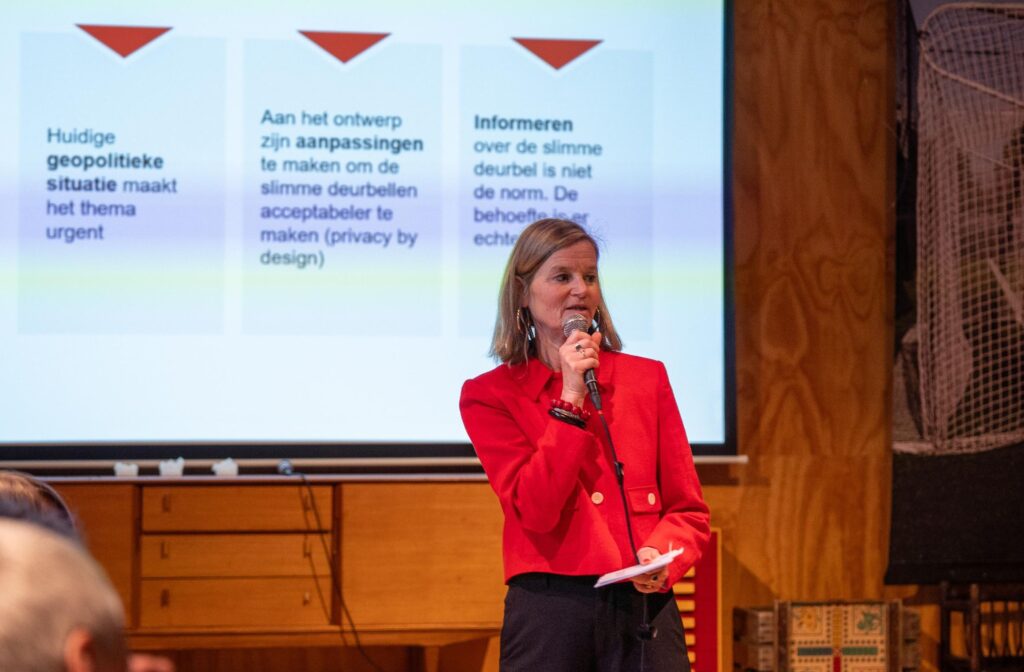
“We are increasingly using doorbells to look at each other, but are we still looking at each other?” With those words, the meeting “The ‘Smart’ Doorbell?!” by Marieke Beekers (municipality of Breda) opened at Privacy First's former office location: the Volkshotel in Amsterdam. The afternoon was organised by the Smart Doorbells Consortium, a partnership between the municipalities of Amsterdam, The Hague, Groningen and Breda, Privacy First, VNG, TU Delft and the AMS Institute. For the past 2 years, they have been researching perceptions about the smart doorbell on the streets of the Netherlands. What do Dutch people think of this doorbell? How safely do we handle the doorbell? How can you start a conversation with your neighbours about this? Does a municipality have the ability to enforce if the doorbell is filming the public space too much? What about deployment and engagement with smart doorbells in other countries? And are there possibilities to redesign the doorbell in such a way that it only does what it is meant to do: show you who is at your door?
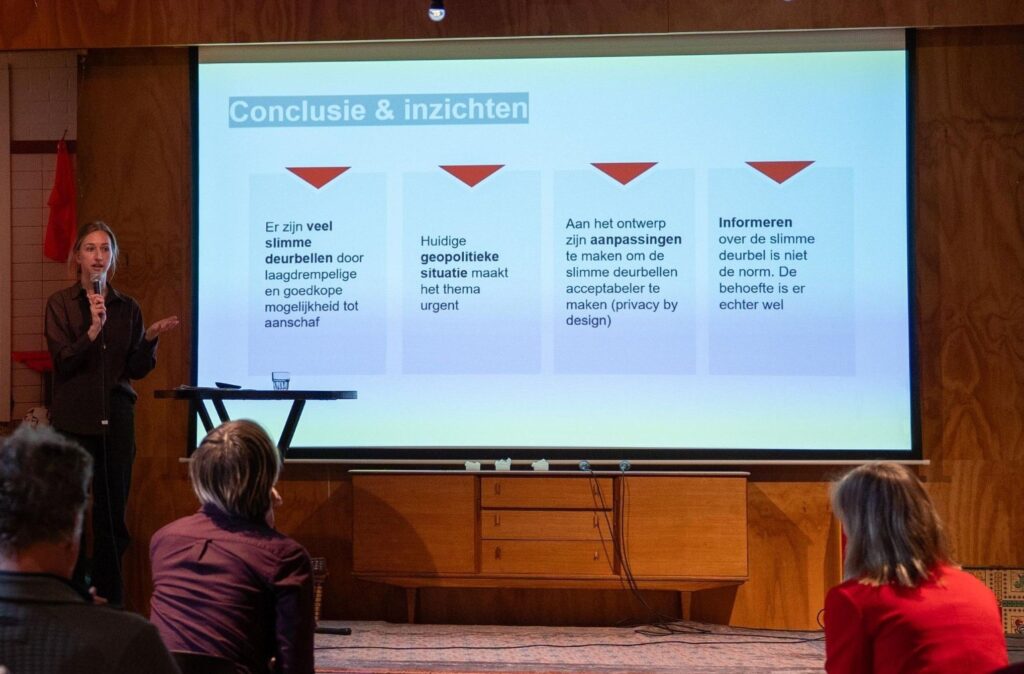
All these questions were addressed this afternoon. The meeting began with a presentation of the consortium by Fenna Peper (Amsterdam municipality). She talked about what the consortium had done over the past period and what the findings were. She also showed an alternative camera lens that captures the surroundings less sharply, ensuring your privacy. She also told about a flyer campaign to engage with your neighbours. The main finding was that, for the time being, many Dutch people do not really seem to care about smart doorbells, at least not as long as it concerns their own. There is relatively little knowledge and engagement on the subject among the population; in that sense, a different factory setting of doorbells could already bring many privacy benefits. The entire presentation of the consortium can be found HERE (pdf).
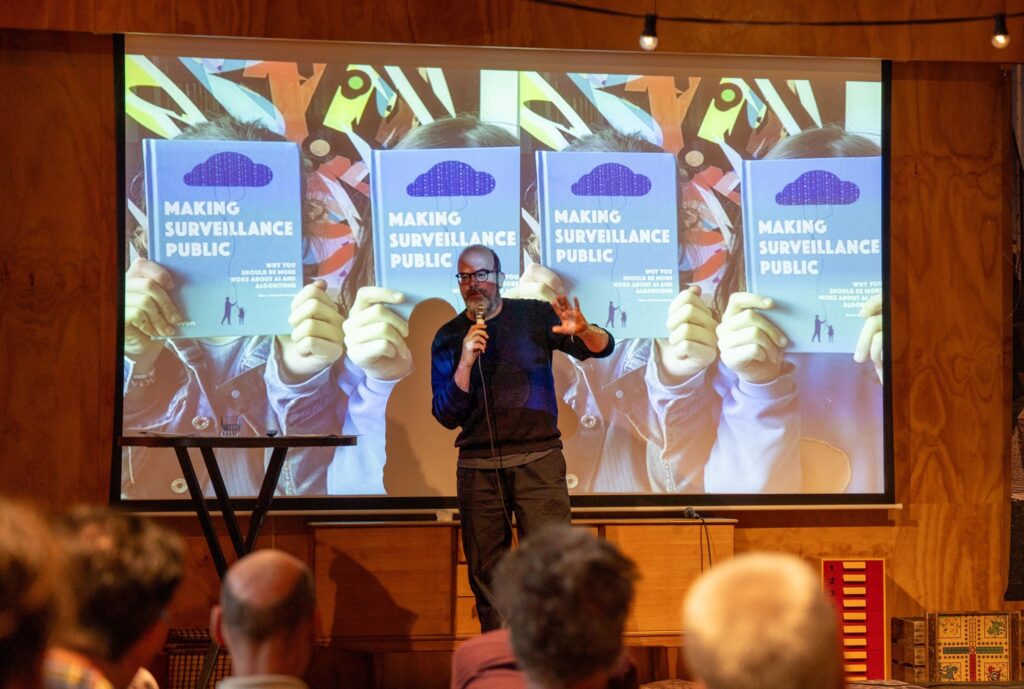
Marc Schuilenburg, Professor of Digital Surveillance at the Erasmus School of Law, argued that with all this luxury surveillance, not just the doorbell but also the Fitbit, Apple watch or Meta glasses, we are organising our own personal surveillance. How this affects our daily lives gets too little attention in scientific research. What he does see is that the Netherlands seems to be going the way of the US. There, tech companies are playing an increasing role in surveillance and can already remotely access private doorbells. This already happened in the US in relation to immigration police ICE. Thus, the smart doorbell ensures that instead of considering everyone an innocent citizen, everyone becomes a potential suspect. There is more and more ‘informal surveillance’: being able to see everything actually causes anxiety and paranoia instead of making you feel safer. It is also fragmenting the police function, with tech companies playing an increasing role. This affects not only privacy, but also values such as digital sovereignty. So be careful what you bring into your home: it is not as innocent as it seems.
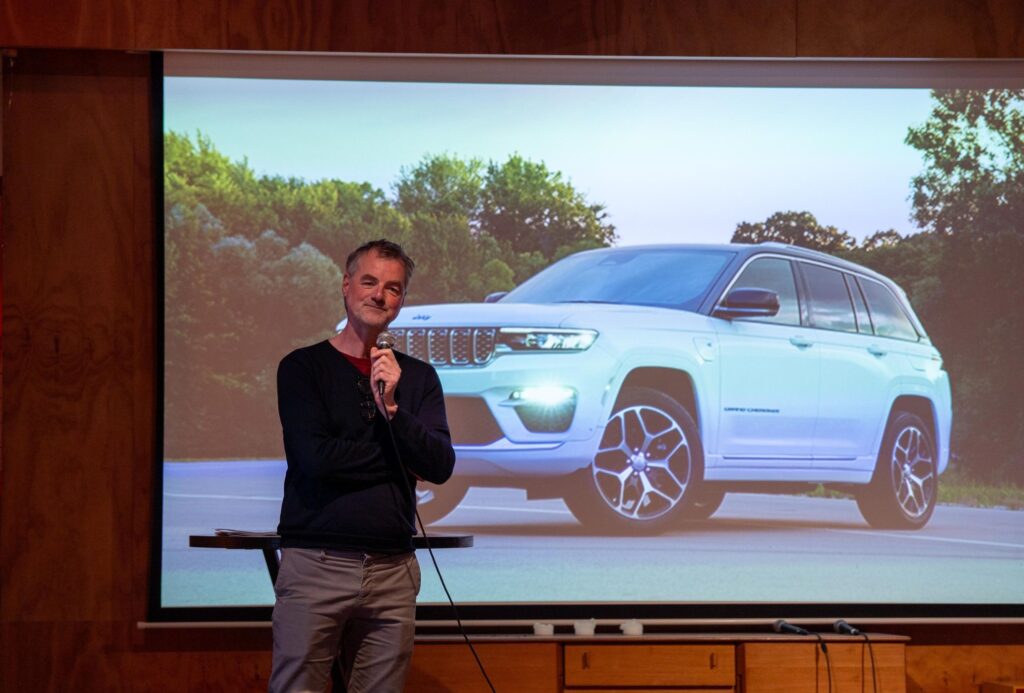
Then came Sander Flight on stage. Sander has been active as a researcher and consultant for the (semi) government sector for 20 years. His specialism is camera surveillance & privacy. He used the metaphor of the big SUV for his comparison with the smart doorbell. Such a car may be wonderful for the owner, nice and high, big and safe, but anything but that for the environment. Not only do they generate a lot of emissions and take up a lot of (parking) space, they also cause many more (fatal) accidents because of their bumper height. He sees a parallel with the doorbell: pleasant for the user, but the disadvantages are much greater. The doorbell is getting smarter, but are we getting smarter? People increasingly feel they are being filmed or eavesdropped on in public spaces. The doorbell also touches on what happened with sensors: municipalities wanted to map them, but on the one hand, the sensors often turned out not to be owned by the municipality and no enforcement was arranged. This led to no counterforce.
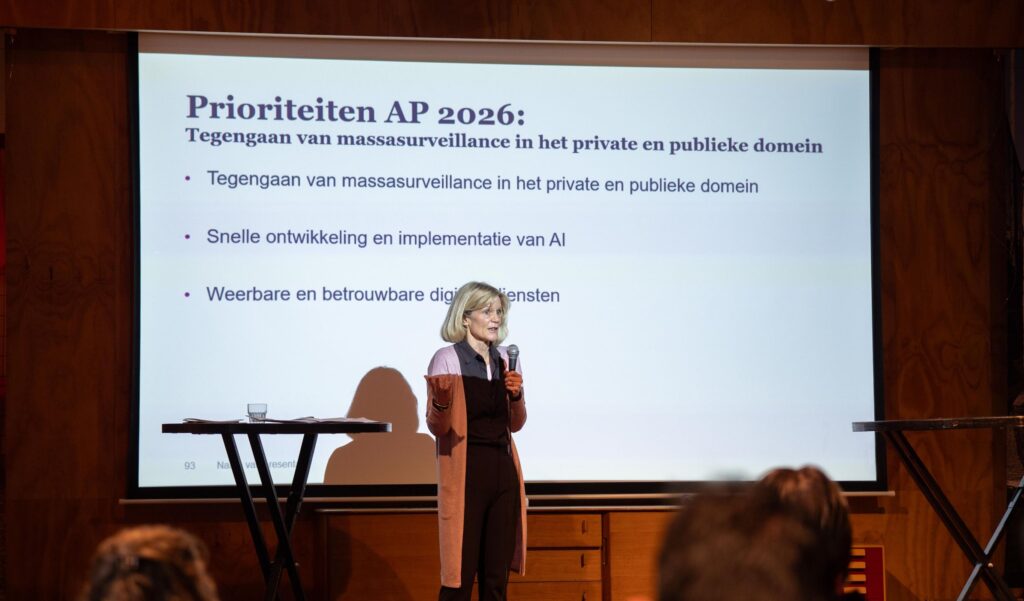
Renske Heijungs, director of supervision and investigation at the Dutch Personal Data Authority (AP) was the final speaker of the afternoon. The AP is the independent Dutch regulator of privacy and protection of personal data, including the smart doorbell. The AP ensures that organisations handle personal data carefully, enforces the General Data Protection Regulation (AVG) and can impose fines for violations. In addition, the AP advises on new legislation and informs citizens and organisations about privacy rights. The AP is seeing an increase in complaints about the smart doorbell. By the way, the AP itself does not use the term “smart doorbells”, but “doorbell cameras”. If doorbells were really smart they would not be filming or storing data for longer than what is allowed. In many complaints to the AP about doorbells, neighbour quarrels appear to be the underlying cause. When it appears that the complainant is mentioned, many complainants subsequently withdraw their complaint. Every complaint is investigated, but this takes a lot of the AP's time. Only the AP can enforce the AVG, municipalities cannot. Municipalities can enforce only to the extent that public order would be at stake. It often appears that private individuals rely too much on the knowledge of neighbourhood policemen and installers - while they by no means always have the necessary knowledge. The AP also notes that the police convey conflicting messages regarding the use of doorbells and can imagine that this leads to confusion. The AP also sees a sharp increase in mass surveillance in the public and private domain. This is a major social issue that needs to be addressed with many more parties; also to make citizens more resilient and increase knowledge. Renske is therefore happy to invite the consortium to discuss this further. Renske's entire presentation is HERE view (pdf).
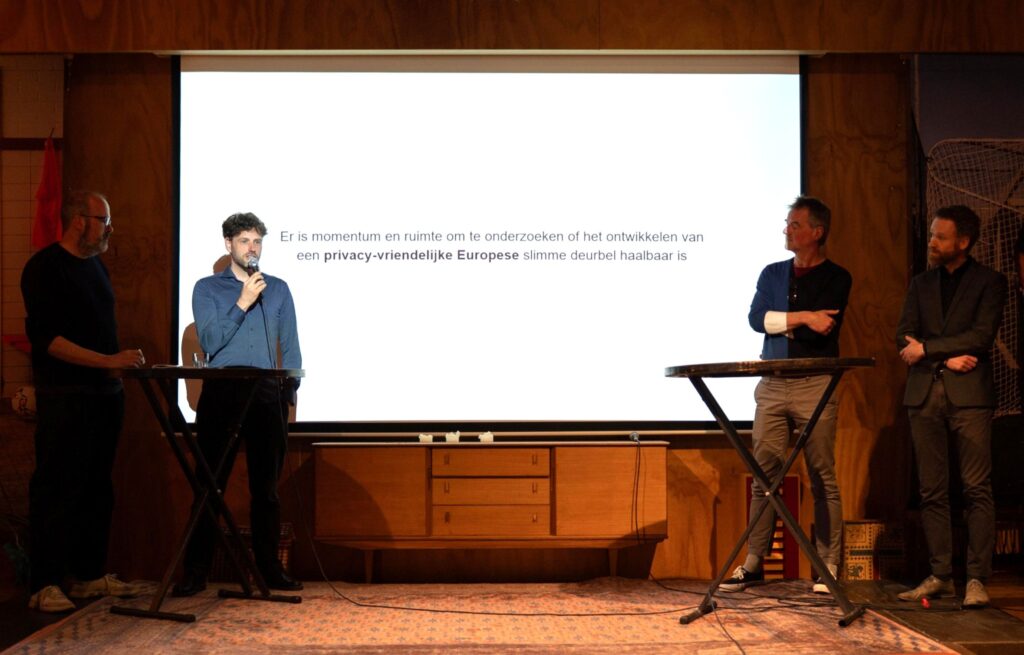
The afternoon ended with a panel discussion with all the speakers, Vincent Böhre (Privacy First) and Thijs Turèl (AMS Institute) on behalf of the consortium. The main conclusion from that conversation was the call from both Marc and Sander, when it comes to inhabitants and privacy, to focus more on drones and Meta glasses. After all, these do not yet have such a high take-up rate in the Netherlands, while their impact could become very big. In that sense, the smart doorbell is already a ‘losing battle’: residents who have one hanging around are not likely to get rid of it. At the same time, Vincent stressed the importance of privacy-by-design and European alternatives. Thijs also saw potential to engage with doorbell manufacturers and importers: other, more privacy-focused basic settings may already have many benefits. In addition, the consortium will seek collaboration with other, more security-focused partnerships.
With enthusiasm and commitment, discussions continued afterwards over drinks. Thanks to all who were there!
Photography: Mina Yee
