

ⒾMachine translation by Deepl
Is there a future for the anonymous blue parking disc?
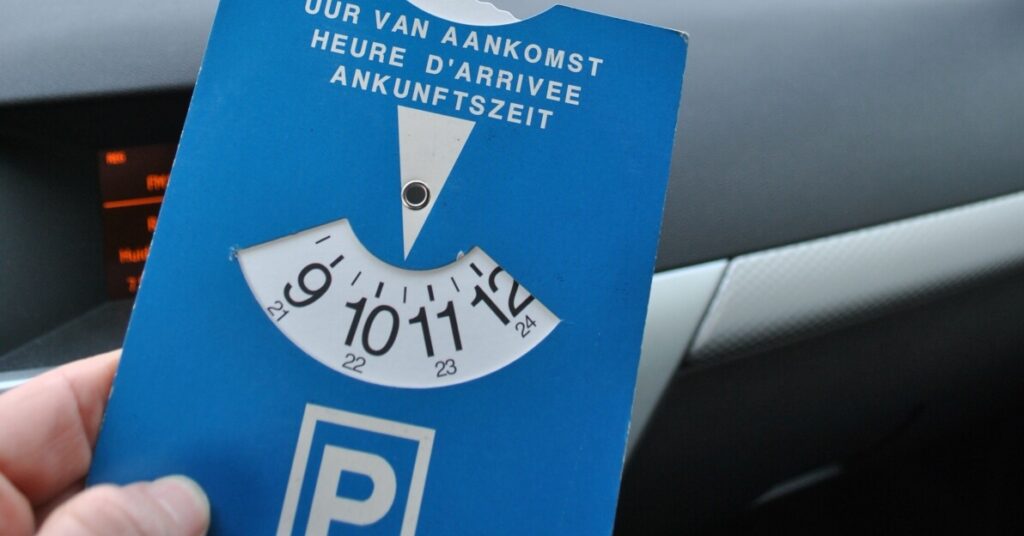
Mr Gilles Ampt's appeal against the Personal Data Authority is due to be heard at the Council of State on 28 July. The reason is the fact that the municipality of Wageningen introduced ticketing parking in early 2020 to allow free parking for a maximum of one hour in part of the city centre. Enquiries with the municipality revealed that the common blue parking disc is not accepted. License plate registration has thus been made mandatory without offering an anonymous alternative. The uniqueness of the case is that this is not paid parking but free parking.
Six years of litigation
As a resident of the municipality of Wageningen, Mr Ampt involved the Personal Data Authority (AP) because, as a certified privacy professional, he questioned the lawfulness of the municipality's processing of personal data in accordance with the AVG. In successive proceedings, this did not lead to the result he desired. Mr Ampt's case is supported by Privacy First.
Protection of citizens' interests
The stakes of the case have grown larger than just this municipality and only license plate parking and the acceptance of the blue parking disc because of the case law accumulated so far. This case also involves the obligation for the controller (municipality) to have a privacy impact assessment carried out and to include reasonable anonymous alternatives to processing in its implementation policy. All this has been lacking and has not been enforced by the AP.
Above all, this is about how the AP carries out its supervisory task. In Mr Ampt's view, the AP is making far too easy work of this. This is a flaw in the adequate protection of citizens' interests where the government processes personal data.
Case details
- Council of State Administrative Law Division, case number 202304226/1/A3
- Session date: Monday 28 July 2025 11:00am
Media
De Gelderlander 24 February 2023: Still enter license plate when parking ‘free’? Wageninger angrily goes to court
Net issues 20 July 2025: Peters Privacy Journal week 29, 2025: Anonymous parking
Domestic Administration 21 July 2025: Free parking by license plate breach of privacy?
Omroep Gelderland 26 July 2025: Gilles wants to be able to park anonymously and therefore takes it to State Council
De Gelderlander 27 July 2025: License plate parking versus blue card: Wageningen privacy battle now at Council of State
Update 19 February 2026
On 28 January this year, the Council of State pronounced in this case of the anonymous blue parking disc as an alternative to one-hour free badge parking. All three grounds of appeal were unfortunately rejected.
Gilles Ampt who brought this case against the Personal Data Authority says: “The most amazing thing about the ruling is that the State Council did not get the facts of the case right. The notice of appeal wrote out in full how all data of parkers is kept for much longer than the municipality claims. With publicly available source citations and all.” What is the case?
While the municipality only retains parking data for 48 hours in the parking meters, the National Parking Registry (NPR) retains all parking data on behalf of the municipality for 90 days (3 months) before anonymising the data and retaining it for the full 7 years (being the legal retention period of tax data).
Ampt continued: “At the hearing, the State Council did not bother to clarify this actively identified and documented discrepancy. The State Council apparently drew its own unsupported conclusions. This has major implications for the grounds of appeal.
Because the processing is not transparent and predictable for parkers, the legal basis for the processing is legally questionable. Similarly, by the letter of the AVG, this means systematic monitoring of location data. The implication is that there is then an obligation on the part of the processing municipality to carry out a privacy impact assessment (DPIA). To this day, this has not been done.”
And the blue parking disc? In the ruling, the Council of State manages to refer to the parking option with a blue parking zone a 3-minute walk away from the car parks with license plate parking. Not very convenient or realistic when you are shopping wholesale, the case discussed at length during the hearing. All in all, an inimitable and disappointing ruling. Gilles Ampt is still deliberating on possible next steps.
Update 26 March 2026
Gilles Ampt filed a complaint about the ruling with the Council of State on 23 March. The complaint concerns the fact that the State Council did not get the facts of the data processing right when they were clearly on the table. This greatly affected two of the three grounds of appeal. The complaint also addresses the fact that the judgment (systematically) ignored the ECHR appeal. This is all the more surprising as the core issue in this case is the right to anonymity in public spaces. This right is increasingly under pressure for everyone in this day and age. The current social importance of this case has not been recognised by the Council of State.
Update 28 April 2026
The AP's oversight role in this Ampt case and the court rulings come into additional special focus with the recent publication of the AP's thematic study on scanning cars for parking enforcement (9 April 2026), see https://www.autoriteitpersoonsgegevens.nl/documenten/inzet-van-scanautos-voor-parkeerhandhaving
The aim of the thematic study was to examine the practice and impact of the deployment of scanning cars in a dozen municipalities and draw conclusions and recommendations. The report provides a number of useful insights and recommendations. One of the impacts identified by the AP is that certain parkers are systematically and disproportionately subjected to unjustified parking fines, such as disabled parking card holders. It is excellent and quite right that the AP has investigated this phenomenon and the practical consequences for citizens.
The AP's thematic study report describes the practice of license plate parking and the control process in chapter 2 (and 3). There, it is clearly described that the NPR is the basic record for the checks on any after-tax parking charges. This practice is irrespective of whether the municipality uses a scanning car. This includes the situation in the municipality of Wageningen. This means that the AP does fully reflect in this report the actual processing of parking data where the AP failed to do so during their supervisory task and as a party to the legal proceedings conducted. In other words, in the Ampt case, the AP helped put the Council of State on the wrong footing.
Supreme Court ruling
Another interesting development is the recent Supreme Court ruling on the after-tax parking tax for free parking in the municipality of Diemen (ECLI:NL:HR:2026:715 dated 24 April 2026). In the relevant parking area, license plate registration was mandatory even at the start of free parking (maximum 2 hours of free parking). The case was brought by someone who had parked there for less than 2 hours and had not registered his/her license plate. That person was levied an additional parking tax during an inspection round. The Supreme Court declared the aftercharge unfounded, remitted the aftercharge and ordered the municipality to pay all legal costs.
For the Supreme Court, the local parking ordinance was all-important. It was not watertight because the obligation to register license plates existed only for payment of parking tax. Free parking was not covered by it.
There was a similar situation in the municipality of Wageningen when Ampt filed his complaint and enforcement request with the AP (2019). That case, incidentally, did not revolve around a disputed aftercharge. The same omission in the local parking ordinance regarding free parking was found by the AP during the investigation it launched. The municipality was given the opportunity to rectify this omission immediately. This was promptly done by a new decision of the municipality's college. Subsequently, the AP took the decision on the complaint and enforcement request that concerned the lawfulness of processing under the AVG.
“Does this Supreme Court ruling change anything about the State Council's ruling? Legal experts may say. In any case, the Supreme Court in this ruling did not look at the lawfulness of processing under the AVG and the ECHR because that was not made the stake of the case.”, said Gilles Ampt.
